“However expressive, symbols can never be the things they stand for.” -Aldous Huxley, Alexander Technique student
We went for a hike yesterday, as we so often do, and I took some pictures, which is also a frequent activity. It’s hard to take a bad picture around here! The ones that stood out, though, weren’t necessarily the scenic views and I would like to take a minute to talk about those.
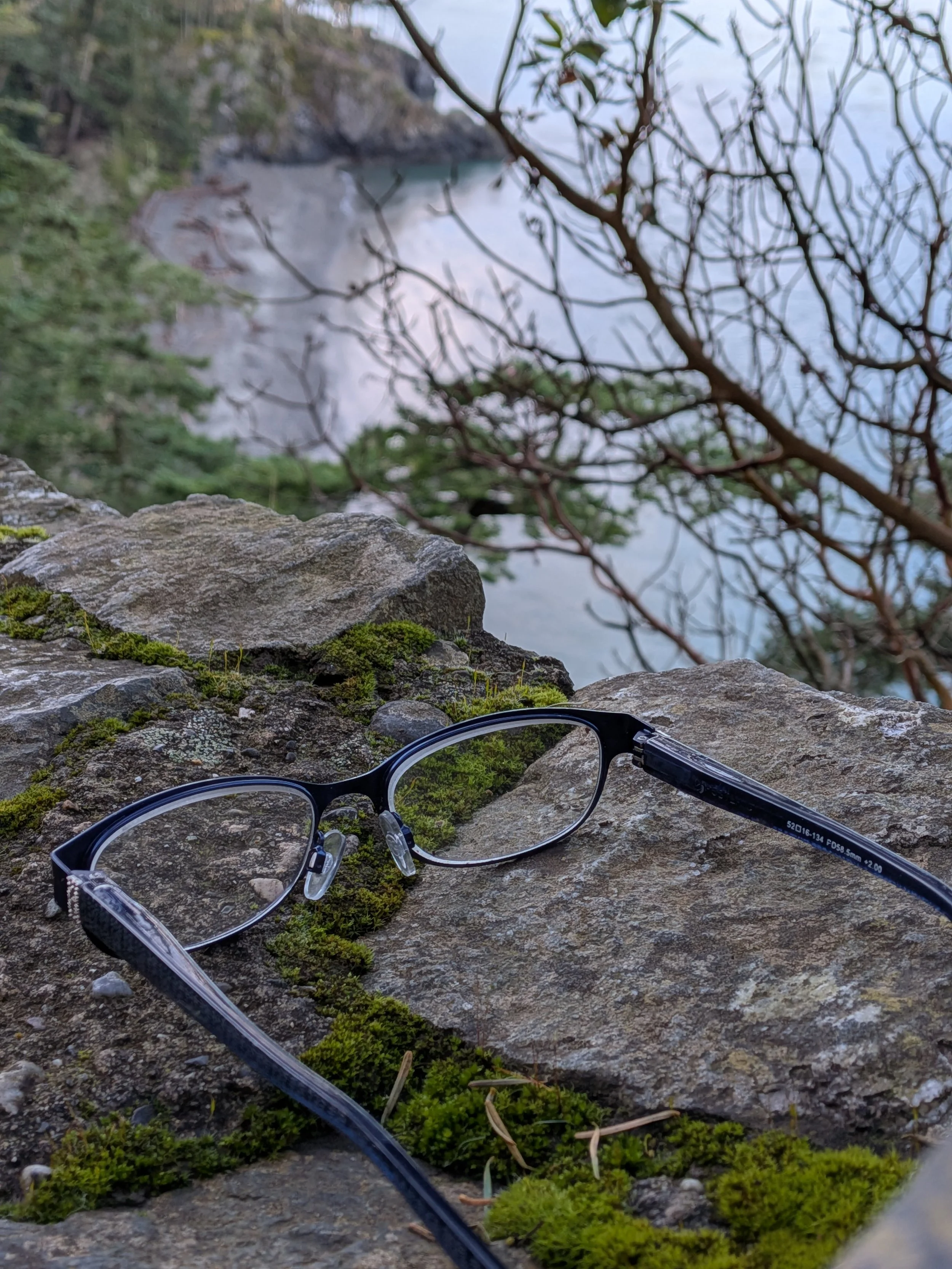
I do hope this person came back and found their glasses, though.
First, the glasses. I have a mildly unfortunate habit of infusing extremely mundane objects with great meaning; in this case, I would love to believe that finding a pair of abandoned glasses on a trail means that I will start to see a clear path forming in front of me. How can I plan and organize better? Or would it be best to do less thinking and more experiencing?
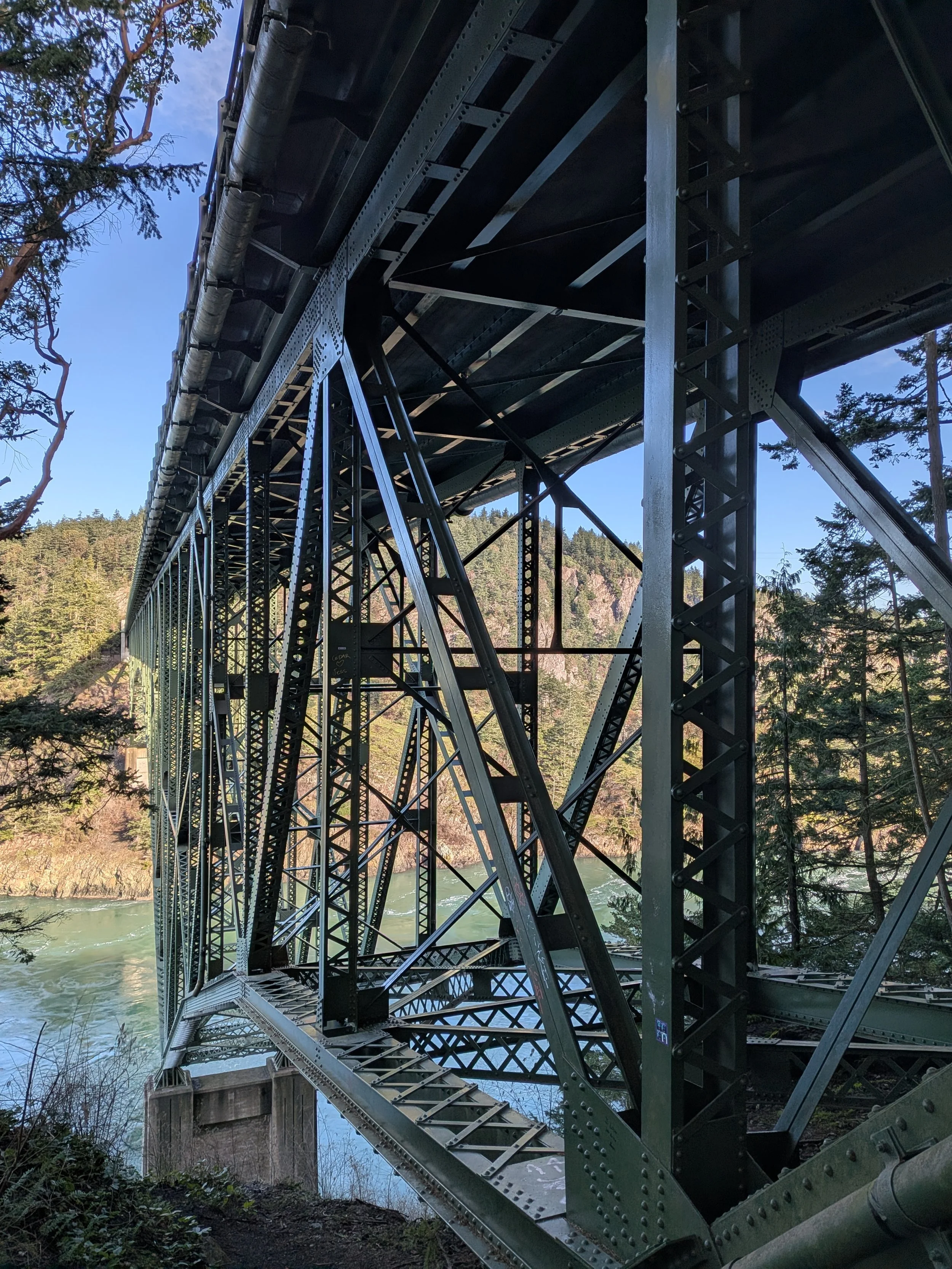
Deception Pass Bridge, from the Whidbey Island side.
Next, the bridge. The views from the top of the bridge are stunning, especially on a clear day. However, the supports are really the important part, and it takes a bit of work to get out of the car and find the path underneath the bridge. What are some support mechanisms that I take for granted? How can I be more attentive to them?
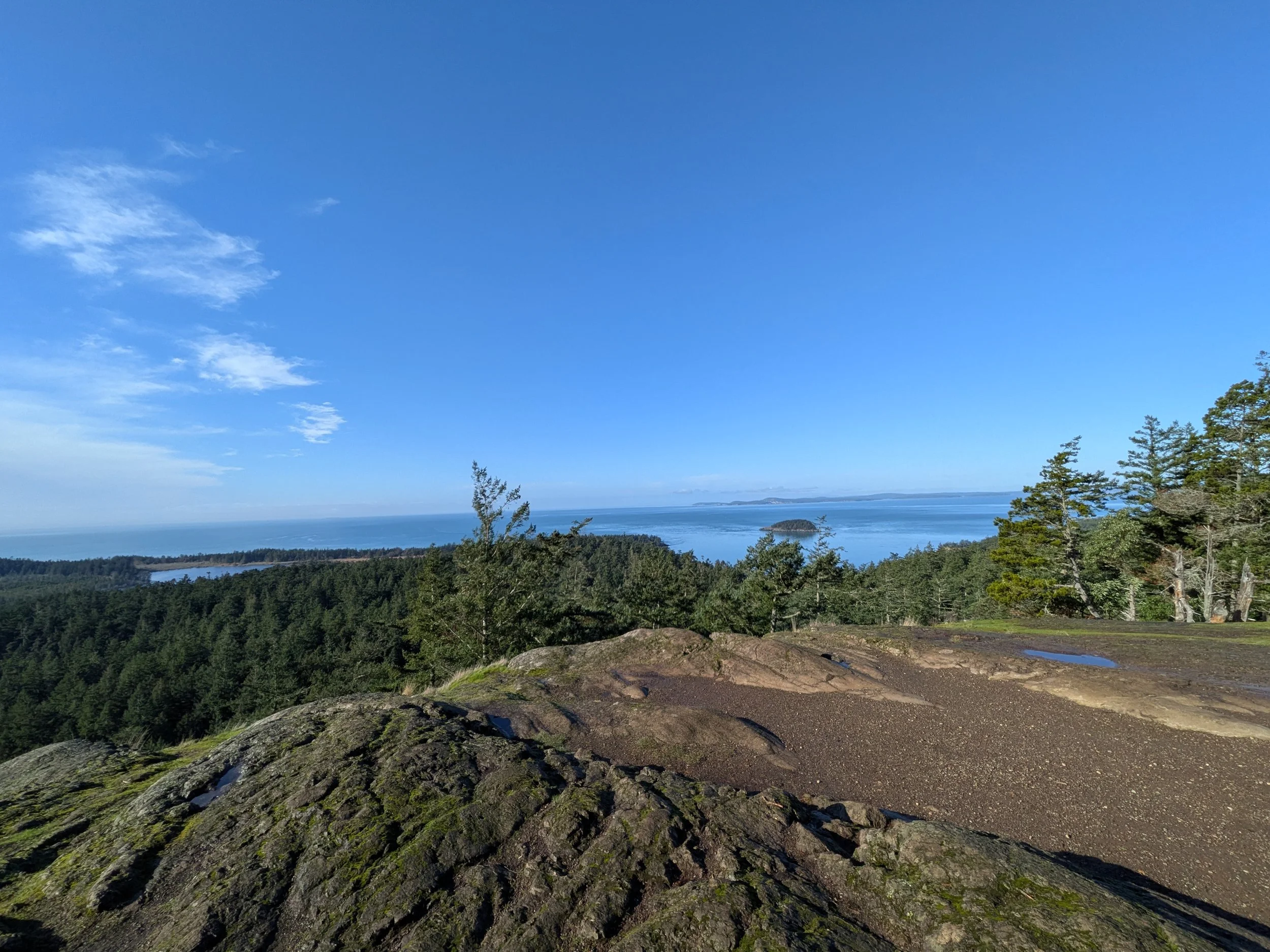
The view from Goose Rock. Cranberry Lake is on the left and Deception Island is the small island in the middle.
And finally, the view. This hike started at sea level and has about 500 ft of elevation gain to the top of Goose Rock, but it looks like you’re much higher in the photographs. What am I taking as a fact that is just a result of perspective? Where can I stand for a more objective view of the situation?
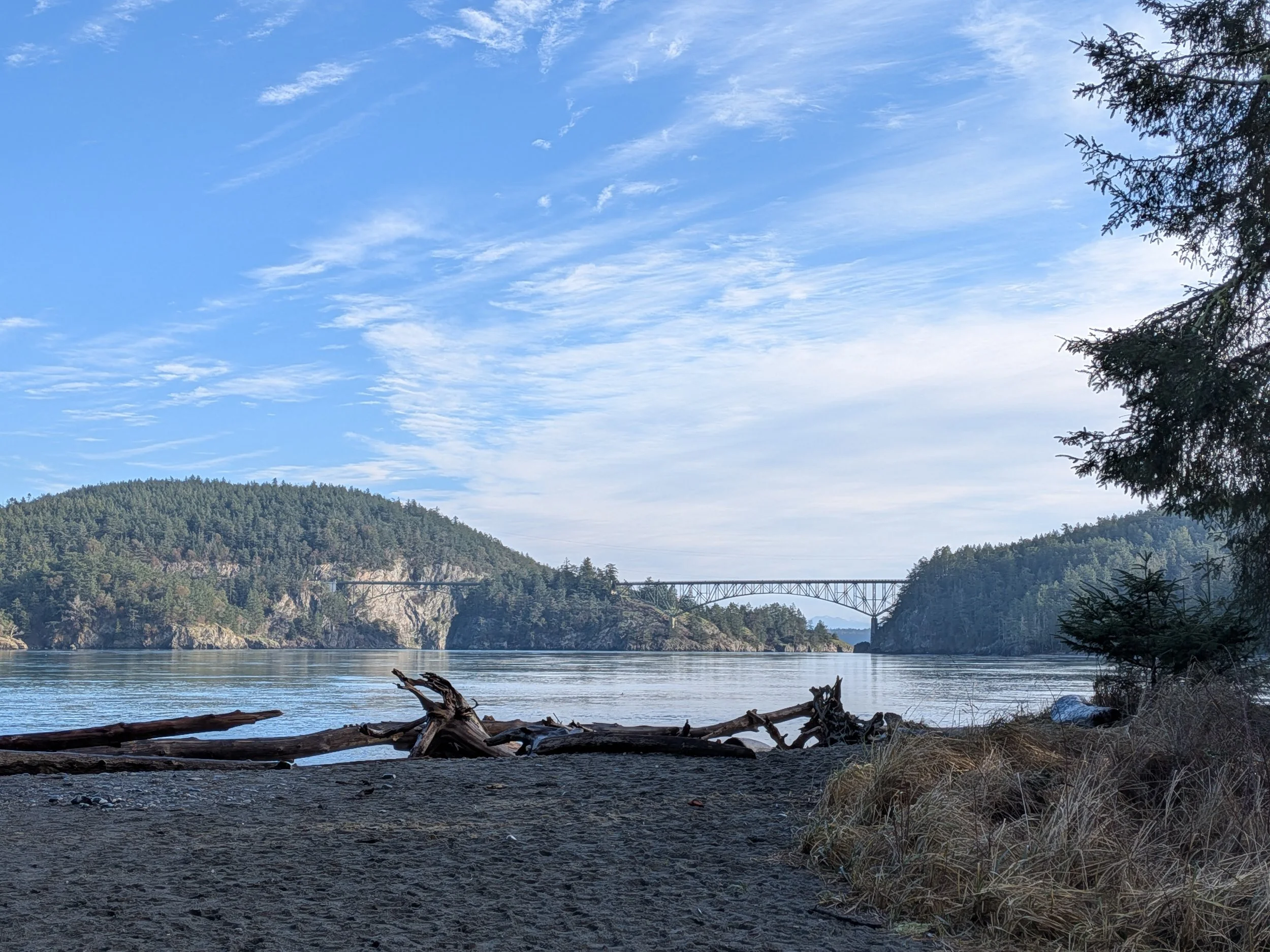
Finally, some actual scenery!
No answers, just questions. I have frequently said that Alexander Technique lessons are a way to open a door, but the student has to be the one to step through and look around for themself. Maybe I’m still standing in a doorway.